St. Charles Lwanga and Companions
Ugandan Martyrs and Courageous Witnesses to Faith and Purity
d. 1886
Ugandan Martyrs and Courageous Witnesses to Faith and Purity
d. 1886
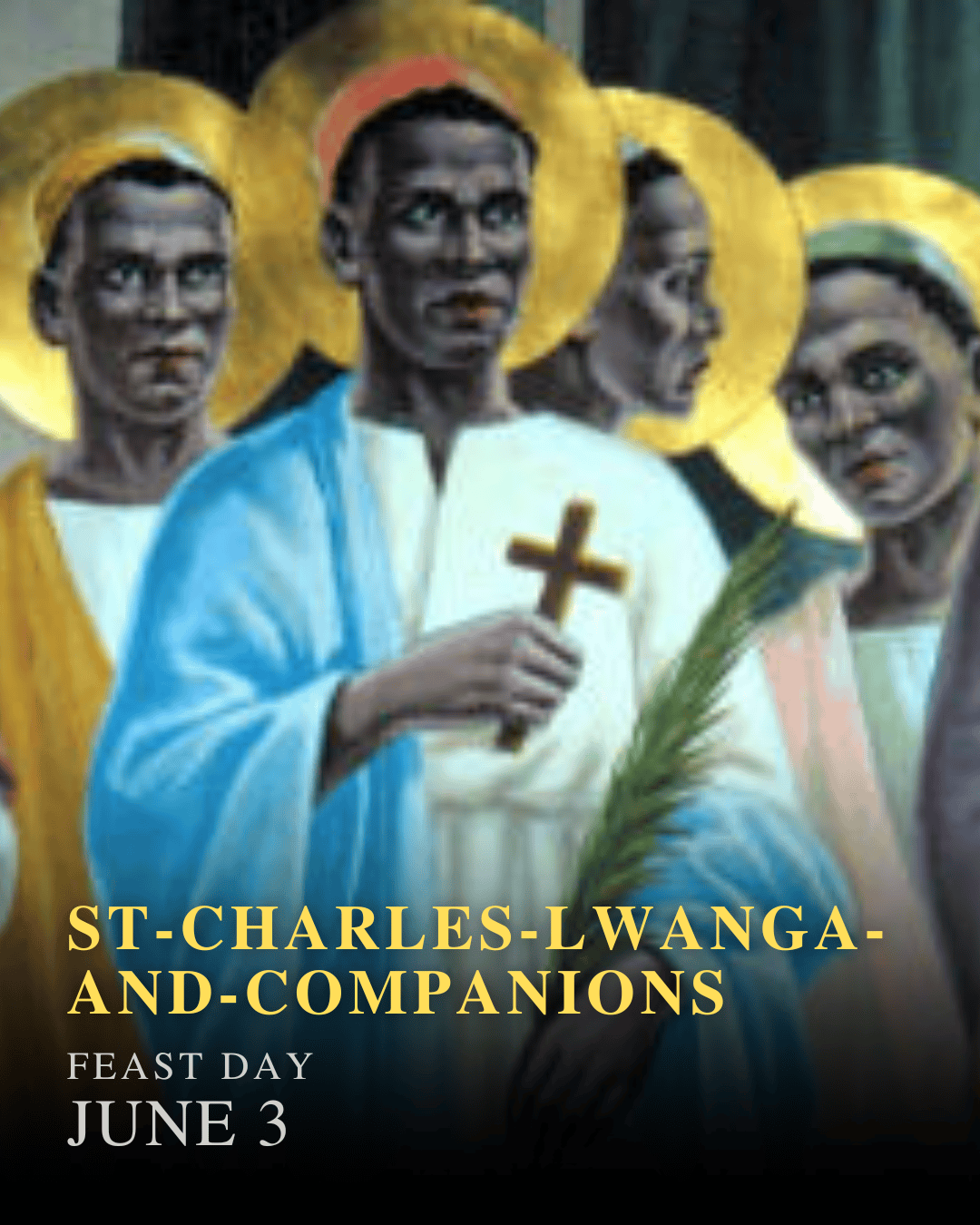
St. Charles Lwanga was one of the leaders of the Ugandan martyrs, a group of young men who gave their lives for Christ in the late 19th century. He served in the royal court of King Mwanga II and became a Christian during a time of growing persecution against believers. His life became a powerful witness to courage, purity, leadership, and unwavering faith.
Charles was known for his strong character and deep sense of responsibility. After the death of another Christian leader, St. Joseph Mukasa Balikuddembe, Charles took on an even greater role in protecting and encouraging young Christians in the royal court. He cared deeply about helping them remain faithful to Christ despite fear and pressure.
King Mwanga opposed Christianity because Christian teaching challenged immoral behavior and demanded loyalty to God above earthly rulers. Charles and his companions refused to abandon their faith or compromise Christian morality. Instead, they chose obedience to Christ even when it placed their lives in danger.
In 1886, Charles Lwanga and many of his companions were executed for their faith. Some were burned alive after enduring terrible suffering with remarkable courage and peace. Their witness became one of the most important testimonies of Christian faith in Africa and continues to inspire Catholics around the world today.
One of the most powerful aspects of the story of St. Charles Lwanga and his companions is their faithfulness under pressure. They were young men living in an environment where obedience to the king was expected without question. Yet they understood that no earthly authority could replace God.
The pressure they faced was intense. Following Christ placed them in direct conflict with the demands of the royal court. Remaining faithful meant risking humiliation, punishment, imprisonment, and death. Still, they chose Christ.
Their witness reminds modern Catholics that faith is not only meant for easy moments. It must remain alive during difficult situations as well. Many Christians today experience pressure from culture, social expectations, workplaces, schools, or even family situations that challenge Christian values.
St. Charles Lwanga and his companions encourage us not to compromise truth for comfort. Their courage shows that holiness often requires strength, sacrifice, and trust in God.
St. Charles Lwanga and his companions faced persecution with extraordinary bravery. Their courage reminds us to stand firm in our faith even when it becomes difficult or unpopular.
These martyrs refused to compromise Christian morality. Their witness teaches us the importance of purity, integrity, and respect for the dignity of the human person.
Charles protected and guided younger Christians with wisdom and compassion. He reminds us that leadership is not about power, but about helping others remain close to God.
Their steadfast witness teaches us to remain faithful to Christ no matter the cost. Real faith continues even during fear, suffering, or uncertainty.
One of the most important parts of the story of the Ugandan martyrs is their commitment to purity and moral integrity. They refused to participate in sinful behavior demanded within the royal court. Their resistance was not rooted in pride or rebellion, but in fidelity to God.
This aspect of their witness remains especially important today. Modern culture often treats purity as unimportant or unrealistic. Yet the lives of these martyrs remind us that purity is not weakness. It is strength rooted in truth and respect for human dignity.
Purity is not only about avoiding sin. It is about learning to love rightly. It shapes the heart to become more free, honest, generous, and capable of authentic love. St. Charles Lwanga understood that protecting young Christians spiritually and morally was an act of real charity.
Their witness encourages Catholics today to live with integrity even when the surrounding culture pressures them to compromise. Holiness often requires the courage to say no to what is wrong so that we can fully say yes to God.
St. Charles Lwanga was not remembered because he held worldly power. He became a leader because he protected and strengthened others spiritually. After the death of Christian leaders before him, Charles stepped forward with courage and responsibility.
He helped prepare fellow believers for baptism and encouraged them to remain faithful despite danger. His leadership was rooted in service rather than control. He cared deeply about the souls entrusted to him.
This offers an important lesson for Catholic life today. Leadership in the Christian sense is not about status, popularity, or personal ambition. True leadership reflects Christ, who came not to be served but to serve.
Parents, teachers, parish volunteers, mentors, and friends all have opportunities to lead others toward God. Sometimes leadership appears in hidden ways: encouraging someone during suffering, praying with a child, guiding a friend back to confession, or simply remaining faithful as an example for others.
The martyrdom of St. Charles Lwanga and his companions remains one of the most moving stories in Church history. Despite threats and suffering, they refused to deny Christ. Many endured torture with peace and prayer.
Some accounts describe the martyrs praying and singing hymns even while approaching death. Their courage astonished those around them. They did not rely only on human strength. Their peace came from faith in eternal life and trust in Christ.
Their deaths did not weaken Christianity in Uganda. Instead, the witness of the martyrs helped the faith grow stronger. This reflects an important truth throughout Church history: persecution often becomes a source of renewal and spiritual strength.
The Ugandan martyrs also remind Catholics that holiness exists in every culture and nation. The Church is universal. Saints come from every background, language, and people because Christ calls all humanity to holiness.
St. Charles Lwanga and his companions speak powerfully to modern Catholics because many Christians today also face pressure to compromise moral truth. The world often encourages silence about faith, rejection of Christian teaching, or acceptance of values opposed to the Gospel.
These saints remind us that following Christ requires courage. Christianity is not only about comfort or inspiration. It involves choosing truth even when doing so becomes costly.
Their witness is especially meaningful for young people. The Ugandan martyrs were mostly very young men, yet they demonstrated extraordinary holiness. Their lives show that youth is not a barrier to sanctity. Young Catholics are fully capable of courage, purity, leadership, and deep faith.
Their example also encourages Catholics to support one another spiritually. Charles did not try to remain faithful alone. He strengthened his companions. Christian life becomes stronger when believers encourage each other in prayer, truth, and love.
One practical way to imitate St. Charles Lwanga and his companions is to ask God for courage in daily life. Courage may involve speaking honestly, defending what is right, resisting temptation, or remaining faithful when it feels difficult.
Another important lesson is purity of heart. Catholics can honor these martyrs by seeking integrity in thoughts, actions, relationships, and choices. Purity is not simply about rules; it is about learning to love God and others rightly.
Their witness also encourages spiritual leadership. Parents, mentors, catechists, youth leaders, and friends can help others remain close to Christ through encouragement and faithful example.
Finally, these saints remind us to trust God during suffering. Even when life feels uncertain or painful, Christ remains present. Faithfulness during hardship can become a powerful witness to others.
The story of St. Charles Lwanga and his companions is a powerful reminder that faith is worth everything. They chose Christ above comfort, safety, and even life itself. Their witness continues to strengthen Christians throughout the world.
Their lives highlight the importance of standing firm in truth, especially in moments of pressure. In a world where values constantly shift, these martyrs call us to remain rooted in God’s truth with clarity and conviction.
These saints are especially meaningful for young people, leaders, and anyone striving to live with integrity. They show that holiness is possible at any age and in any place when we trust God completely.
You may also strengthen your spiritual life through our Morning Prayer and Evening Prayer pages. Daily prayer helps the heart remain rooted in Christ during both peaceful and difficult seasons.
“St. Charles Lwanga and Companions, help me remain faithful to Christ with courage, purity, and unwavering love.”
— Prayer inspired by the witness of the Ugandan Martyrs