St. Matthias
Apostle Chosen by God
1st Century
Apostle Chosen by God
1st Century
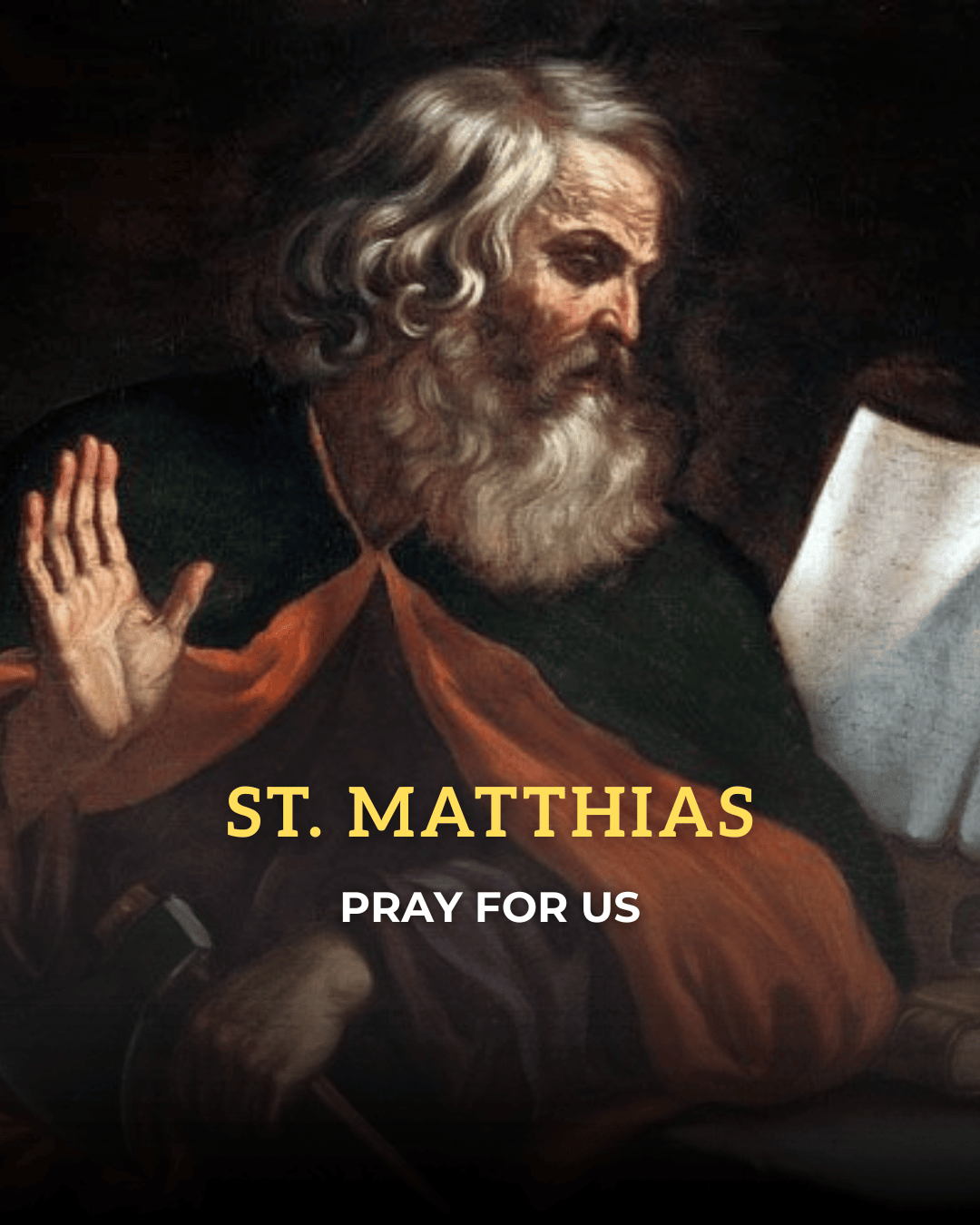
St. Matthias was the apostle chosen to replace Judas Iscariot after his betrayal of Jesus. His story is found in the Acts of the Apostles, during a very tender and uncertain moment in the life of the early Church. The apostles had witnessed the death and Resurrection of Christ, but they had also experienced the deep wound caused by Judas’ betrayal.
Before the mission of the Church moved forward in a more public way, the apostles prayed and discerned who should take Judas’ place. This was not treated like an ordinary decision. They knew the role of an apostle mattered deeply. The Twelve had a special meaning because they reflected the twelve tribes of Israel, and they were called to be witnesses of Christ to the world.
Matthias was chosen because he had been with Jesus and the apostles from the beginning of the Lord’s public ministry. He had seen the teachings, miracles, suffering, death, and Resurrection of Christ. He was not someone who appeared suddenly. He had been there quietly, faithfully, and consistently.
What makes St. Matthias so meaningful is that most of his faithfulness was hidden. Scripture does not give us long speeches from him. It does not record many details about his personality, his background, or his later missionary work. Yet he was chosen for one of the most important roles in the early Church.
His life reminds us that God often sees what the world overlooks. A person may not be famous, noticed, praised, or publicly celebrated, but God sees every act of faithfulness. Matthias had followed Christ before anyone knew his name would be remembered. He teaches us that hidden faithfulness is never wasted.
You can also explore the lives of other apostles on our Sts. Philip and James page.
After the Ascension of Jesus, the apostles gathered in prayer. They were waiting for the coming of the Holy Spirit, but they were also preparing for the mission Christ had entrusted to them. Peter stood among the believers and spoke about the need to choose another witness to take the place of Judas.
Two men were proposed: Joseph called Barsabbas, also known as Justus, and Matthias. Instead of relying only on human preference, the early Church prayed. They asked the Lord, who knows every heart, to show whom He had chosen.
This detail matters. St. Matthias was not chosen because of popularity. He was not chosen through ambition or self-promotion. He was chosen through prayer. His calling was received, not seized. That alone gives us a beautiful lesson about vocation, purpose, and trust.
Many people want clarity about their calling, but God often forms the heart quietly before revealing the next step. Matthias had already been living as a disciple before he was given the title of apostle. His public mission came after years of hidden preparation.
St. Matthias followed Christ quietly and consistently. He teaches us to remain faithful even when no one seems to notice.
He was chosen through prayer and discernment. He reminds us that God’s plan does not always unfold according to human timing.
Matthias was ready when God called him. His life shows the importance of living prepared to say yes to the Lord.
He accepted his mission without seeking attention. He encourages us to serve God with humility and a willing heart.
St. Matthias speaks deeply to anyone who has ever felt unseen. Many people quietly serve their families, churches, communities, workplaces, and homes without much recognition. They pray, sacrifice, forgive, help, and remain faithful in ordinary ways that may never be publicly praised.
His life reminds us that God sees hidden faithfulness. The world often notices the loudest voices, the most visible roles, and the most impressive accomplishments. God looks at the heart. He sees the person who keeps showing up, keeps believing, keeps loving, and keeps following Him even when the path feels quiet.
Matthias also teaches us that waiting is not wasted. Before he was chosen as an apostle, he had already spent time walking with Christ. He had already listened, learned, and remained close. His hidden years were not meaningless. They were preparation.
This is comforting for anyone in a season of waiting. God may be forming strength, patience, wisdom, and humility long before a bigger responsibility becomes visible. Like Matthias, we are invited to be faithful before we are noticed.
One of the most beautiful things about St. Matthias is that he did not need to be at the center of attention to be close to Christ. His discipleship was steady. He was there from the beginning, walking with Jesus, listening to His words, witnessing His works, and staying near the community of believers.
In a world that often measures worth by visibility, St. Matthias reminds us that holiness can grow in quiet places. A person can become deeply faithful in ordinary routines, private prayer, small sacrifices, and hidden obedience.
Not every holy life is dramatic. Some saints are remembered for great miracles, bold writings, or public martyrdom. Matthias is remembered in a quieter way. He was chosen because he had remained. That alone is powerful.
There is great strength in remaining with Christ when life feels unclear. There is holiness in continuing to pray when answers seem slow. There is grace in serving without applause. St. Matthias shows us that God can build an apostolic heart in silence.
St. Matthias reminds us that every Christian has a mission. His story is not only about replacing Judas. It is also about the mercy and faithfulness of God. Even after betrayal and brokenness, God continued to guide His Church. The mission did not end because of human failure.
This is an important reminder for our own spiritual lives. Sin, disappointment, betrayal, and failure can leave deep wounds. Yet God is able to restore, renew, and lead His people forward. The choosing of Matthias shows that God does not abandon His Church in moments of weakness. He provides what is needed.
Like St. Athanasius and St. Peter Chanel, St. Matthias shows that being chosen by God often involves perseverance, courage, and quiet dedication rather than public recognition.
His life encourages us to remain faithful in small things, to trust God’s timing, and to believe that our hidden yes to God matters. We may not always understand how God is preparing us, but faithfulness in the present moment is never meaningless.
You may also strengthen your daily faith through our Morning Prayer and Evening Prayer pages.
Scripture does not give many details about the later life of St. Matthias after he was chosen as an apostle. Catholic tradition holds that he preached the Gospel faithfully and gave his life in service to Christ.
Different traditions describe his missionary work in different places, and because the historical details are limited, the Church remembers him most clearly for what Scripture does tell us: he was a true witness to the Resurrection and was chosen to share in the apostolic mission.
His limited biography can actually help us reflect more deeply. Sometimes the saints with the fewest recorded details remind us that holiness is not about being remembered for everything we did. It is about belonging completely to Christ.
St. Matthias may not have left behind long writings or famous stories, but his name remains in the Church because he answered God’s call. His life points us back to the heart of discipleship: follow Christ, stay faithful, and be ready when God asks for your yes.
“You did not choose me, but I chose you.”
John 15:16
The first lesson from St. Matthias is that hidden faithfulness matters. Before he was chosen publicly, he had already been following Christ. He teaches us that the quiet years of obedience, prayer, and perseverance are not wasted.
The second lesson is that God’s timing is different from ours. Matthias was not chosen at the beginning of Jesus’ public ministry as one of the Twelve, but God still had a place for him. Sometimes a calling unfolds later than expected, but that does not make it less meaningful.
The third lesson is that the Church is strengthened through prayerful discernment. The apostles did not simply make a rushed decision. They prayed and trusted the Lord to guide them. This reminds us to bring important decisions to God instead of relying only on pressure, fear, or personal preference.
The fourth lesson is humility. Matthias accepted the mission given to him without needing attention. He shows us that service to God is not about status. It is about love, obedience, and willingness.
His feast day on May 14 is a beautiful reminder to ask for a faithful heart. We can ask St. Matthias to pray for us when we feel overlooked, when we are waiting for direction, or when we need courage to say yes to God.
“St. Matthias, help me to remain faithful and ready to follow God’s call.”
— Prayer inspired by his life