Sts. Marcellinus and Peter
Early Christian Martyrs and Courageous Witnesses to Christ
d. c. 304
Early Christian Martyrs and Courageous Witnesses to Christ
d. c. 304
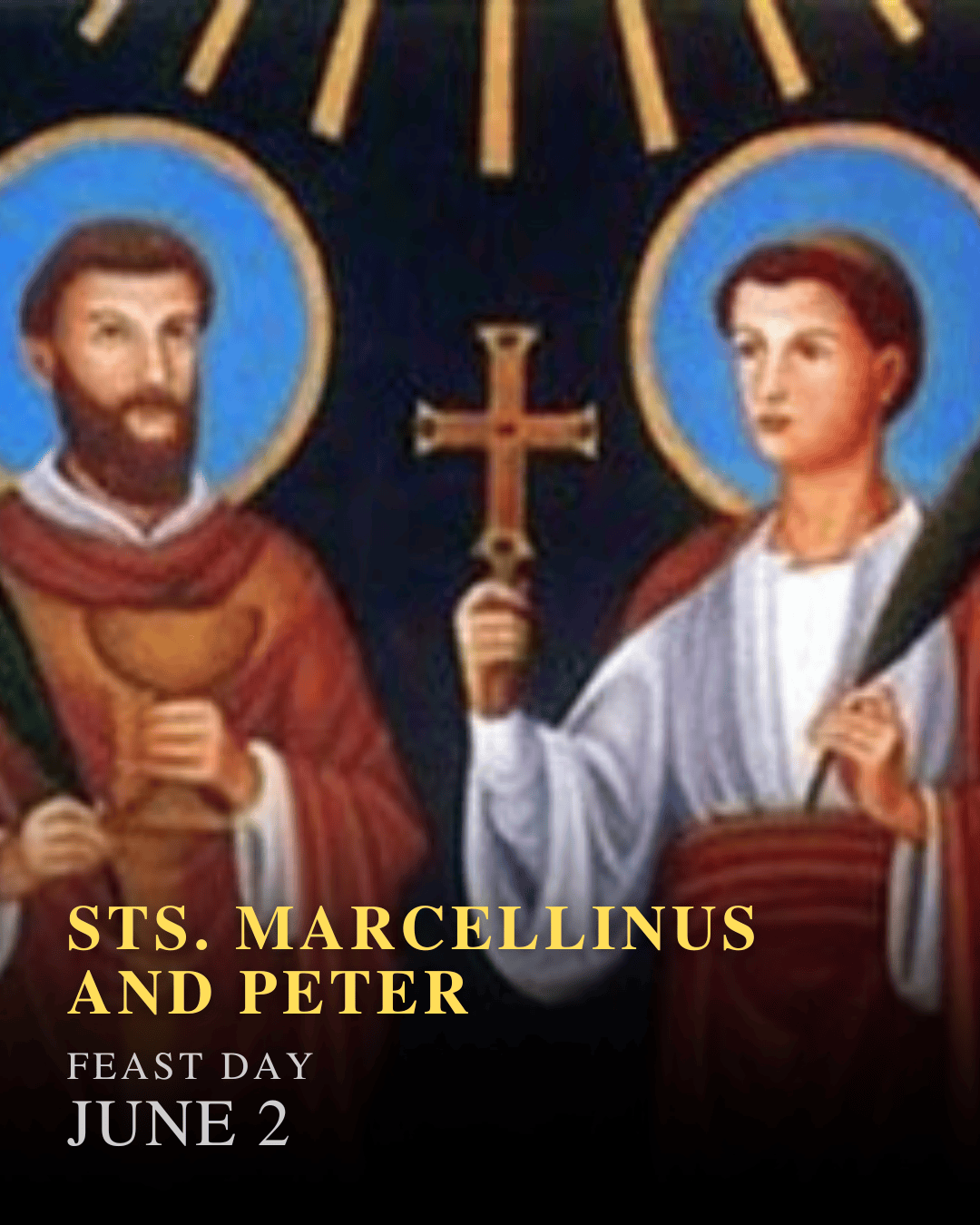
Sts. Marcellinus and Peter were early Christian martyrs who lived during a time when following Jesus could cost a person everything. Marcellinus was a priest, and Peter was known as an exorcist, a ministry connected with prayer, spiritual authority, and service to those suffering under evil influences. Together, they became powerful witnesses to Christ during one of the most difficult periods of persecution in the early Church.
They lived during the persecution under the Roman Emperor Diocletian, when Christians were arrested, tortured, and killed for refusing to deny their faith. Christianity was viewed with suspicion and hostility because Christians refused to worship Roman gods or treat the emperor as divine. Yet even in these dangerous circumstances, Marcellinus and Peter continued serving the Church faithfully.
According to Christian tradition, they were imprisoned because of their faith. Even while suffering in prison, they continued preaching the Gospel and helping others come closer to Christ. Their courage inspired conversions, showing that the power of faith cannot be chained. Eventually, they were executed around the year 304, becoming martyrs whose witness strengthened the early Christian community.
One of the most powerful aspects of the lives of Sts. Marcellinus and Peter is their faithfulness during persecution. They did not follow Christ only when it was comfortable or socially accepted. They remained faithful when obedience to God carried real danger.
The early Christians understood that faith was not simply a private opinion. Their relationship with Christ shaped every part of their lives. Because of this, many refused to deny Jesus even when threatened with suffering or death. Marcellinus and Peter belonged to this courageous generation of believers whose witness helped preserve and strengthen the Church.
Their courage reminds Catholics today that faithfulness often requires sacrifice. While many Christians no longer face the same physical persecutions, there are still pressures to compromise, remain silent, or conform to values that oppose the Gospel. The example of these saints encourages us to choose Christ even when discipleship becomes difficult.
Their witness also reminds us that holiness does not depend on circumstances. Some people believe they can only grow spiritually when life feels peaceful or stable. Yet the saints show something different. Holiness can grow even in suffering, uncertainty, weakness, and fear when a person continues turning toward God.
Sts. Marcellinus and Peter remained faithful when Christianity was dangerous. Their courage reminds us that love for Christ must become stronger than fear.
They continued serving God even in prison and persecution. Their example teaches us to remain steady in prayer, trust, and obedience.
Their witness reportedly led others toward conversion even while they suffered. They remind us that faithful living can influence souls in hidden ways.
They endured suffering without abandoning Christ. Their perseverance teaches us to stay faithful during trials, disappointments, and spiritual struggles.
One of the most moving parts of their story is that Marcellinus and Peter continued serving Christ even while imprisoned. Their chains did not stop their faith. Instead, their suffering became another place where the Gospel was proclaimed.
According to tradition, they encouraged fellow prisoners and helped lead people to conversion. This shows a remarkable spiritual freedom. Even though their bodies were confined, their hearts remained rooted in Christ. They did not allow fear, bitterness, or despair to silence their witness.
This can speak powerfully to modern Catholics who feel trapped by difficult circumstances. Some feel burdened by illness, family struggles, loneliness, anxiety, financial stress, or hidden suffering. Sts. Marcellinus and Peter remind us that God can still work through us even during painful seasons.
Sometimes people believe they can only serve God once their problems are solved. Yet many saints served most powerfully in moments of weakness. Grace does not wait for perfect circumstances. God often works most deeply through surrendered hearts.
The word “martyr” means witness. Christian martyrs witness to Christ not only through words, but through complete faithfulness. Sts. Marcellinus and Peter gave their lives because they refused to deny Jesus.
Their martyrdom reminds us that Christianity is not merely a cultural identity or occasional practice. It is a relationship with Christ so important that nothing else becomes greater than Him. The martyrs understood that earthly life, while precious, is temporary. Eternal life with God is the ultimate goal.
Most Catholics today are not called to physical martyrdom, but the Church often speaks about “daily martyrdom.” This means choosing Christ through ordinary sacrifices: remaining faithful in marriage, forgiving someone who hurt us, defending the dignity of life, resisting temptation, praying faithfully, or standing for truth when it is unpopular.
The witness of these martyrs challenges modern Christians not to live lukewarm lives. Their courage invites us to examine whether Christ truly holds first place in our hearts.
The early centuries of Christianity were marked by persecution, yet they were also marked by incredible faith. Christians gathered secretly for worship, celebrated the Eucharist, cared for the poor, and encouraged one another despite danger.
Sts. Marcellinus and Peter were part of this heroic age of the Church. Their names became deeply honored among Christians because their witness strengthened believers who came after them. In fact, their names are included in the Roman Canon, one of the ancient Eucharistic prayers still used in the Mass today.
This inclusion reminds Catholics that the Church is built not only through teachings and structures, but through holy lives. The blood of the martyrs became a testimony to the truth of Christianity. Their sacrifice inspired countless others to remain faithful.
Reflecting on the early martyrs can help modern Catholics appreciate the gift of the faith more deeply. Many Christians throughout history suffered greatly so that the Gospel could continue to be proclaimed.
Sts. Marcellinus and Peter teach modern Catholics the importance of consistency. Faith is not meant to appear only on Sundays or during moments of comfort. True discipleship touches every part of life.
Their example also encourages courage in ordinary situations. Speaking kindly about the faith, remaining honest when lying would be easier, protecting family prayer time, or standing against immoral pressures can all become quiet acts of Christian witness.
They also remind us of the power of hidden influence. Many saints were not famous during their lifetimes. Yet their quiet fidelity changed lives. A faithful Catholic parent, friend, teacher, parish volunteer, or caregiver may never fully realize how deeply their witness impacts others.
Finally, these saints remind us that suffering does not have the final word. Their persecutors tried to silence Christianity, yet the Church continued growing. God can bring grace and fruitfulness even from painful circumstances.
One practical way to imitate Sts. Marcellinus and Peter is to practice faithfulness in small daily choices. Holiness is usually built gradually through consistent prayer, acts of charity, honesty, forgiveness, and trust.
Another way is to pray for courage. Many people fear rejection, criticism, or misunderstanding when living openly as Christians. Asking God for courage can help strengthen the heart during difficult moments.
Their example also encourages perseverance during suffering. When life becomes heavy, it can be tempting to become discouraged or spiritually distant. These saints remind us that God remains present even in hardship.
Finally, Catholics can honor these martyrs by remembering the persecuted Church around the world today. Many Christians still face violence, discrimination, and imprisonment because of their faith. Praying for them becomes a way of living in solidarity with the Body of Christ.
Sts. Marcellinus and Peter remind us that holiness is often revealed most clearly under pressure. They did not need comfort, popularity, or safety in order to belong to Christ. Their faith remained alive in suffering.
Their story also speaks to the power of quiet witness. They were not remembered because they held worldly power, but because they stayed faithful. Their lives show that God can use hidden sacrifices and ordinary faithfulness to strengthen the Church.
For Catholics today, their witness is a call to live the faith with courage and consistency. We may not face the same kind of persecution, but we are still called to choose Christ when it is inconvenient, misunderstood, or costly.
You may also deepen your spiritual life through our Morning Prayer and Evening Prayer pages. Daily prayer helps strengthen faith during both peaceful and difficult seasons.
“Sts. Marcellinus and Peter, help me remain faithful to Christ with courage and trust.”
— Prayer inspired by the witness of Sts. Marcellinus and Peter