St. Rita of Cascia
Patron Saint of Impossible Causes
1381–1457
Patron Saint of Impossible Causes
1381–1457
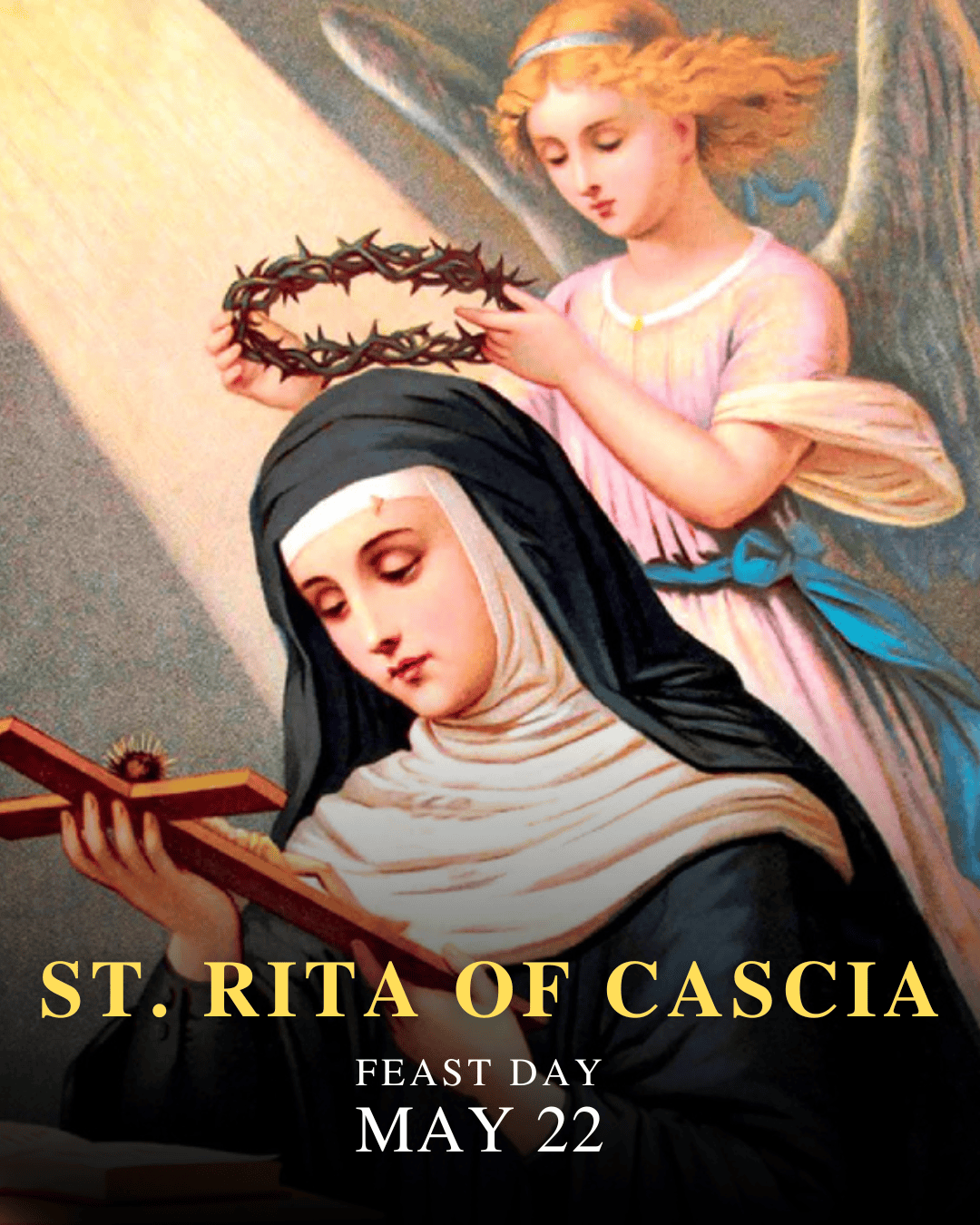
St. Rita of Cascia is one of the most beloved saints in the Catholic Church, especially for those who are carrying a situation that feels impossible. She is often called the patron saint of impossible causes because her life was marked by painful trials, difficult relationships, heartbreaking losses, and prayers that required years of patience. Yet through everything, she remained close to God. Her story is not the story of an easy life. It is the story of a faithful woman who allowed grace to work in the middle of suffering.
Rita was born in 1381 in Roccaporena, a small village near Cascia in Italy. From a young age, she desired to give herself fully to God. She felt drawn to religious life, but her parents arranged for her to marry, which was common at the time. Rita obeyed and entered marriage, not because her life unfolded exactly as she had hoped, but because she trusted God even when the path before her was not the one she would have chosen for herself.
Her marriage was not easy. Her husband was known to be harsh and difficult, and Rita endured many years of sorrow within her home. Still, she responded with prayer, patience, and a quiet strength rooted in faith. She did not pretend that suffering was good in itself, but she believed that God could bring grace even into painful circumstances. Her witness is especially powerful for anyone who has ever felt trapped, misunderstood, or weary from a long struggle.
After many years, Rita’s husband experienced a change of heart before his death. This was one of the first signs of the deep spiritual fruit that came from her perseverance. Later, when her sons were tempted toward revenge after their father’s death, Rita prayed that they would not commit grave sin. Her prayer was not easy. She loved her sons, but she loved their souls even more. This part of her life shows the depth of her trust in God’s mercy and her desire for peace over vengeance.
St. Rita’s life helps us understand that holiness is not about avoiding suffering. It is about allowing God to transform the heart through suffering. She experienced disappointment, family pain, loss, grief, and uncertainty. Yet she did not allow bitterness to become the final word in her story. Instead, she continued to choose prayer. She continued to choose forgiveness. She continued to believe that God was working even when she could not see the full picture.
After the deaths of her husband and sons, Rita sought to enter the Augustinian convent in Cascia. At first, she was refused because of the conflict connected to her family’s history. This must have been another painful moment for her. She had long desired religious life, and even after so many trials, the door did not open immediately. But Rita did not give up. She prayed, waited, and trusted. Eventually, she was accepted into the convent, where she lived as an Augustinian nun.
In religious life, Rita became known for her humility, prayer, penance, charity, and deep union with Christ. She meditated often on the Passion of Jesus. Her love for the suffering Christ was not distant or sentimental. She wanted to share in His love and offer her own sufferings with Him. Tradition says that she received a wound on her forehead resembling a thorn from Christ’s crown of thorns. This wound became a visible sign of her closeness to the Passion.
For many Catholics, this part of St. Rita’s life is deeply moving. She reminds us that Jesus is not far from suffering. He entered it. He carried it. He redeemed it. When we suffer, we are not abandoned. We can unite our pain to His and ask Him to bring healing, strength, and grace from places that feel broken.
St. Rita endured long seasons of hardship without giving up on God. She teaches us to remain faithful when prayers take time, relationships are difficult, and answers do not come quickly.
She chose forgiveness in circumstances where resentment would have been understandable. Her life reminds us that forgiveness is not weakness. It is a grace that frees the soul from being ruled by bitterness.
Rita believed that God could transform even the most painful situations. She encourages us to trust His mercy, His timing, and His power when life feels impossible.
Her life was rooted in prayer. She brought her marriage, her children, her grief, her vocation, and her suffering before God. She shows us that nothing is too heavy to bring to the Lord.
St. Rita is called the saint of impossible causes because so many parts of her life seemed humanly impossible. A difficult marriage seemed impossible to heal. Family conflict seemed impossible to resolve. Her sons’ anger seemed impossible to soften. Her desire for religious life seemed impossible after years of delay and rejection. Yet again and again, God’s grace entered the places that seemed closed.
This title does not mean that every prayer will be answered exactly as we imagine. St. Rita’s life shows something deeper. It teaches that no suffering is beyond God’s reach, no heart is beyond His mercy, and no situation is too complicated for His providence. Sometimes God changes the situation. Sometimes He changes the person. Sometimes He gives strength to endure what cannot yet be changed. In every case, He remains present.
Many people turn to St. Rita when they are praying for troubled marriages, family healing, reconciliation, conversion, peace after conflict, or strength in long suffering. Her life feels approachable because she knew real family pain. She was not untouched by disappointment. She understood what it meant to pray for people she loved. She understood what it meant to keep trusting when the answer was not immediate.
For Catholic women today, St. Rita’s witness can be especially comforting. Many women silently carry heavy intentions for their families, marriages, children, friends, or personal healing. St. Rita reminds us that those hidden prayers matter. Even when no one else sees the tears, God sees. Even when progress feels slow, grace can still be moving beneath the surface.
Forgiveness is one of the strongest themes in St. Rita’s life. She lived in a time and culture where family revenge could easily continue from one generation to the next. After her husband was killed, the temptation toward vengeance surrounded her family. But Rita did not want hatred to win. She prayed for peace, for mercy, and for her sons to be protected from the spiritual destruction that revenge can bring.
Her example does not make forgiveness look easy. It is not easy. Forgiveness often takes time, prayer, tears, and repeated surrender. It does not mean pretending that wrong was acceptable. It does not mean ignoring justice or staying in unsafe situations. Rather, forgiveness means refusing to let hatred take possession of the heart. It means asking God for the grace to release the desire for revenge and to entrust wounds to His justice and mercy.
St. Rita’s life is helpful because it keeps forgiveness connected to prayer. She did not rely on her own strength alone. She turned to God again and again. This is important for anyone who feels unable to forgive. Sometimes the most honest prayer is simply, “Lord, I cannot do this without You.” That kind of prayer is already a beginning.
Her witness also reminds us that forgiveness can break cycles. When one person chooses peace instead of retaliation, grace can enter a family in a new way. This does not erase pain, but it opens a door for healing. St. Rita became a sign that mercy can be stronger than resentment.
One lesson from St. Rita is that delayed dreams can still become holy. She wanted religious life from a young age, but that dream did not unfold immediately. Her path included marriage, motherhood, grief, and waiting. Yet none of those years were wasted. God used every season of her life to form her heart. This can comfort anyone who feels that life has taken a different path than expected.
Another lesson is that prayer has power even when results are slow. St. Rita prayed through difficult years. She prayed for her husband. She prayed for her sons. She prayed for peace. She prayed for her vocation. Her life teaches us that prayer is not wasted just because we cannot see immediate change. Prayer keeps the soul connected to God while grace works in ways we may not yet understand.
St. Rita also teaches that suffering can become an offering. This does not mean we should seek suffering for its own sake or minimize real pain. It means that when suffering comes, we can bring it to Christ and ask Him to use it for love, purification, healing, and deeper union with Him. Rita’s devotion to the Passion shows that she found strength by staying close to Jesus crucified.
Finally, St. Rita teaches that holiness can grow in complicated family life. She was a wife, mother, widow, and nun. She understood different vocations from the inside. Her story speaks to women in many seasons of life because she knew obedience, sacrifice, grief, hope, and surrender. Her life shows that every season can become a path to God.
You can ask St. Rita of Cascia to pray for you whenever you are facing a situation that feels impossible. This may be a family wound, a strained relationship, a long unanswered prayer, a season of grief, a troubled marriage, a burden for your children, or a private struggle that no one else fully understands. St. Rita is a gentle companion for those who feel tired from praying and waiting.
A simple way to ask for her intercession is to speak honestly: “St. Rita, please pray for this impossible situation and help me trust God.” You do not need perfect words. You can bring your fear, anger, sadness, confusion, or exhaustion to God and ask St. Rita to pray with you. Saints are not replacements for Jesus. They are friends in heaven who point us back to Him.
Many people also pray novenas to St. Rita, especially when they are asking for perseverance, reconciliation, or peace. A novena can be helpful because it gives structure to prayer over nine days. It also reminds us that faithfulness matters. Even when we do not feel strong, we can keep showing up before God one day at a time.
You may also find comfort in our Healing Prayer, Evening Prayer, and Morning Prayer pages. If you are looking for other saints who bring comfort in suffering, you may also want to read about St. Dymphna, St. Gianna Beretta Molla, and St. Monica.
St. Rita of Cascia reminds us that nothing is impossible with God. Her life speaks directly to those facing difficult relationships, unanswered prayers, grief, family conflict, or overwhelming challenges. She does not offer a shallow message that pain disappears instantly. Instead, she offers a deeper hope: God can work in the places we cannot fix by ourselves.
Like St. Dymphna and St. Gianna Beretta Molla, she shows that suffering can become a path to holiness when it is united with Christ. Her witness encourages us to trust in God’s timing, to persevere in prayer, and to believe that transformation is always possible through grace.
St. Rita also reminds us that peace begins in the heart. She lived through conflict, but she did not let conflict define her soul. She suffered injustice, but she did not let bitterness become her identity. She grieved deeply, but she continued to seek God. This is why so many Catholics love her. She feels close to those who are hurting because she knew hurt herself.
Her life invites us to bring our impossible situations to God and trust that He is at work, even when the answer is hidden. She teaches us to pray with courage, forgive with grace, suffer with Christ, and hope beyond what we can see.
“St. Rita, help me to trust God in the impossible and to persevere in faith.”
— Prayer inspired by her life