St. Philip Neri
Apostle of Joy and Humility
1515–1595
Apostle of Joy and Humility
1515–1595
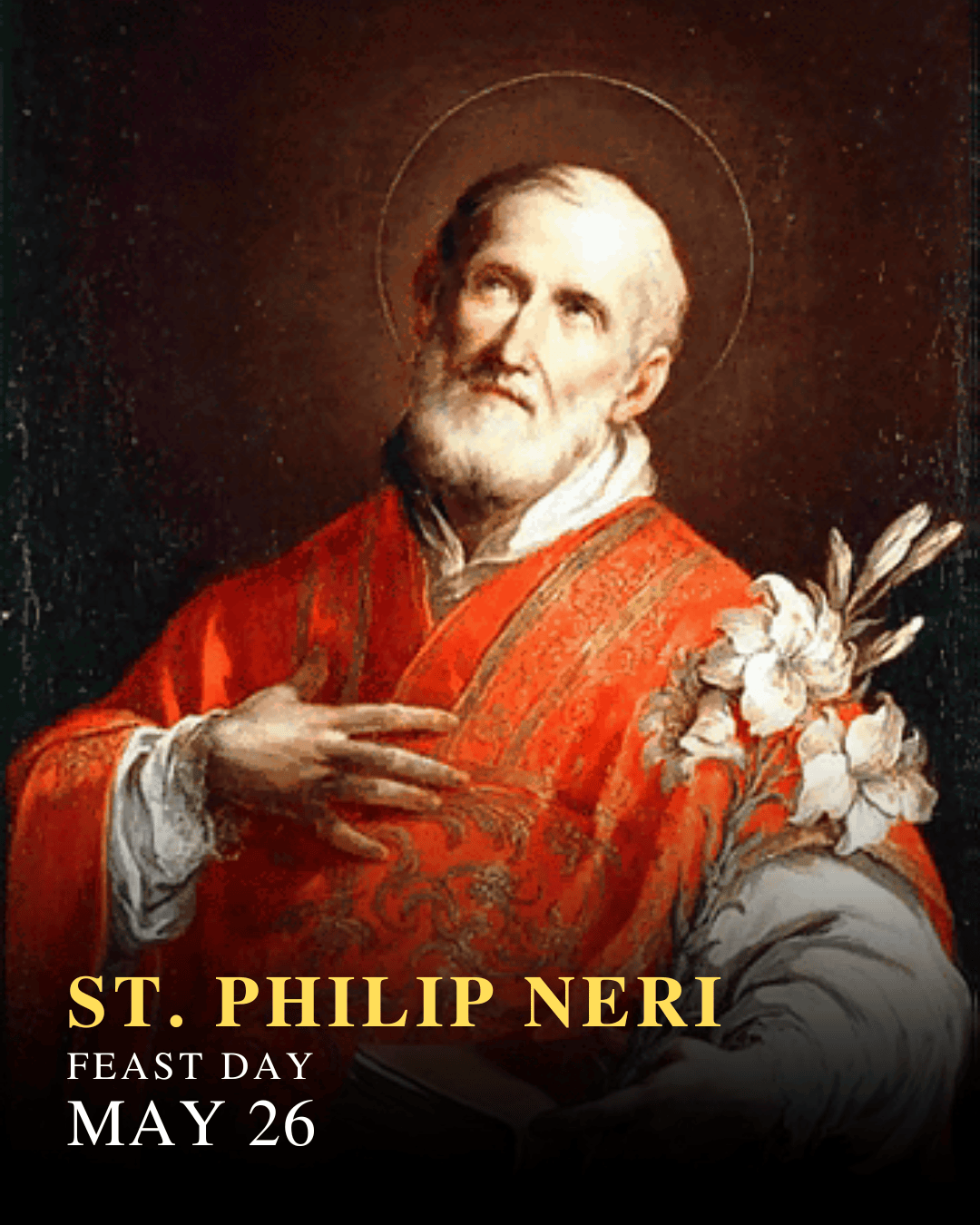
St. Philip Neri was an Italian priest known for his joyful spirit, deep prayer, humility, humor, and tender love for God and others. He was born in Florence in 1515 and later became one of the most beloved saints of Rome. His holiness did not feel cold, distant, or severe. It was warm, inviting, and deeply human. People were drawn to him because he helped them see that the Christian life is not only about duty, but also about joy, friendship, freedom, and love.
Philip lived during a time when the Church needed renewal. Rather than beginning with harsh criticism, he began with personal holiness, prayer, and genuine care for souls. He walked through the streets of Rome, spoke with people, visited the sick, cared for the poor, encouraged young men, and helped ordinary people return to God. His way of evangelizing was personal and relational. He did not simply preach at people. He listened, laughed, encouraged, corrected gently, and invited them to a deeper life with Christ.
He eventually became a priest and founded the Congregation of the Oratory, a community of priests and brothers dedicated to prayer, preaching, music, teaching, and spiritual formation. The Oratory reflected Philip’s own heart: faithful to the Church, rooted in prayer, warm in friendship, and joyful in spirit. He believed holiness could flourish through conversation, community, confession, Scripture, and simple acts of charity.
St. Philip Neri is often called the Apostle of Rome because he helped renew the spiritual life of the city through joy and holiness. His life reminds us that joy can be a powerful witness. A joyful Christian life can open hearts, soften defenses, and help others see the beauty of God.
St. Philip Neri’s joy was not shallow or forced. It came from a heart deeply rooted in God. He knew that real joy is not the same as constant happiness or an easy life. Christian joy is deeper. It is the peace and gladness that come from knowing we are loved by God, forgiven by Him, and called into friendship with Him. Philip’s joy was strong because it was grounded in prayer.
He often used humor to lead people away from pride and toward humility. When others praised him, he sometimes did silly or embarrassing things to avoid being admired too much. This was not because he lacked seriousness about faith. It was because he understood how dangerous vanity can be. He wanted his heart to belong to God alone.
His joy made holiness feel approachable. Some people imagine saints as distant figures who never smiled, struggled, or laughed. Philip breaks that false image. He shows that holiness can be cheerful, playful, affectionate, and full of life. He did not lower the demands of the Gospel, but he helped people desire holiness by showing them its beauty.
This is especially helpful today, when many people feel weighed down by anxiety, comparison, discouragement, or spiritual heaviness. St. Philip reminds us that joy is not a distraction from faith. Joy can be a fruit of faith. When we live close to God, even ordinary moments can become lighter, freer, and more filled with grace.
St. Philip radiated joy because his heart was close to God. He teaches us that faith is meant to be lived with hope, gratitude, and a gladness that can encourage others.
He avoided attention and praise, often using humor to keep himself grounded. He reminds us that holiness grows when we seek God’s glory instead of our own.
He cared deeply for others, especially the poor, the sick, and those far from God. He shows us how to love people where they are and gently help them move closer to Christ.
His joyful life was rooted in prayer. He encourages us to stay connected to God daily so our words, actions, and relationships can be shaped by grace.
One of the most memorable things about St. Philip Neri is his humor. He could be playful, witty, and surprising. But beneath his humor was a serious spiritual purpose. Philip knew that pride can quietly enter the heart, especially when a person is admired for holiness or good works. Instead of allowing praise to feed vanity, he often used humor to humble himself.
This teaches an important lesson. Humility does not mean hating ourselves or pretending we have no gifts. Humility means living in truth. It means knowing that every gift comes from God and should lead us back to Him. Philip’s humor protected him from taking himself too seriously. It helped him remain free.
Many people today feel pressure to build an image, prove themselves, and appear impressive. St. Philip offers a refreshing alternative. He shows that a person can be holy without being self-important. A person can be wise without being cold. A person can be serious about God without losing warmth and laughter.
His humility also made him approachable. People were not afraid to come to him. They could speak honestly, ask questions, confess sins, and begin again. He created an atmosphere where grace could work because people felt seen, welcomed, and encouraged.
St. Philip Neri understood the power of friendship. He gathered people together for prayer, conversation, spiritual reading, music, and encouragement. This eventually grew into the Oratory, a community that helped many people deepen their relationship with God. Philip knew that faith is strengthened when people walk together.
His approach was simple and deeply human. He met people in ordinary places. He talked with them. He listened to their struggles. He encouraged them to go to confession, pray, serve the poor, and love God more sincerely. He did not make holiness feel unreachable. He helped people take the next step.
This is a beautiful lesson for Catholic women today. Many people are longing for faithful friendship. They need someone who will encourage them without judging harshly, speak truth without cruelty, and walk with them patiently. St. Philip reminds us that friendship can be apostolic when it leads people closer to Christ.
A simple conversation, an invitation to pray, a kind correction, a shared meal, or a moment of encouragement can become a channel of grace. We do not need to be famous or highly educated to help someone grow in faith. We need charity, sincerity, and a heart rooted in God.
Although St. Philip Neri is remembered for joy and humor, his life was deeply prayerful. His joy did not come from personality alone. It came from intimacy with God. He spent long hours in prayer, loved the Eucharist, and encouraged others to develop a sincere spiritual life. His outward cheerfulness flowed from inward union with Christ.
This matters because joy without prayer can become fragile. It may depend too much on mood, circumstances, or approval from others. Philip’s joy had deeper roots. He had given his heart to God, and that love shaped the way he treated people. Prayer made him compassionate, patient, free, and courageous.
He also had a great love for confession and spiritual direction. He helped people examine their hearts honestly and return to God with trust. He knew that real joy is connected to repentance. When the soul is reconciled with God, it becomes lighter. Grace restores what sin burdens.
For anyone who wants a more joyful spiritual life, Philip’s example begins with prayer. Make time for God. Speak honestly with Him. Receive the sacraments. Ask for the grace to let go of pride, resentment, and fear. Joy grows where grace is welcomed.
St. Philip Neri’s example matters today because many people associate religion with heaviness, rules, or guilt. While the Christian life does involve sacrifice and conversion, it is also meant to lead us into joy. Philip shows that holiness is attractive when it is lived with love, authenticity, and warmth.
His life also reminds us that joy can evangelize. A person who lives faith with peace and gladness can make others curious about God. Joy does not mean pretending everything is easy. It means carrying life with trust because Christ is near. This kind of joy can be especially powerful in families, friendships, workplaces, and parish communities.
Philip also challenges us to become more approachable. Sometimes people need correction, but they also need kindness. They need truth, but they also need patience. Philip knew how to combine both. He did not water down holiness, but he helped people desire it.
For Catholic women, his witness can be deeply encouraging. In homes, groups, ministries, and daily conversations, joy and kindness can open doors. A gentle word, a sense of humor, a welcoming spirit, and a prayerful heart can help others encounter the love of Christ.
One lesson from St. Philip Neri is that joy is a serious part of holiness. The saints were not joyful because life was easy. They were joyful because God was real to them. Philip teaches us to ask whether our faith is only something we carry as a burden or something that also gives life to our hearts.
A second lesson is that humility keeps the soul free. Philip refused to become attached to praise. He knew that admiration can become dangerous if it turns the heart inward. His playful humility reminds us not to build our identity on what others think of us.
A third lesson is that people are often drawn to God through love before they are ready for instruction. Philip’s warmth made people feel safe enough to listen. He did not separate truth from charity. He allowed charity to carry truth into people’s hearts.
Finally, Philip teaches that renewal can begin through simple faithfulness. He did not start by trying to control everything. He prayed, served, listened, gathered people, and loved them. Through these simple acts, God renewed many souls.
You can ask St. Philip Neri to pray for you when you need joy, humility, patience, or a renewed love for God. He is a wonderful intercessor for anyone who feels spiritually heavy, discouraged, overly serious, or afraid to approach God with confidence.
If you struggle with pride or caring too much about what others think, ask Philip to help you grow in holy freedom. If your prayer life feels dry, ask him to help you return to God with trust. If your home or community feels tense, ask him to help you bring peace, humor, and kindness into your relationships.
Parents, teachers, ministry leaders, and group moderators can also ask for his intercession. Philip knew how to guide people with gentleness and truth. He can help us correct without harshness, encourage without flattery, and lead others toward God with humility.
You may also deepen your spiritual life through our Morning Prayer, Evening Prayer, and Healing Prayer pages. For more saints who witnessed to faith through teaching, renewal, and joyful holiness, you may enjoy reading about St. John of Avila, St. Bernardine of Siena, and St. Francis of Assisi.
St. Philip Neri reminds us that joy is a powerful witness of faith. His life shows that people are drawn to God not only through teaching, but through love, humility, authenticity, and kindness. He helped renew the Church by bringing people back to prayer, confession, community, and the love of Christ.
Like St. John of Avila and St. Bernardine of Siena, he helped renew the Church by bringing people back to God. Yet his path had a special warmth. He evangelized through friendship, conversation, laughter, and sincere spiritual guidance.
His example encourages us to live our faith with joy, remain humble, and share God’s love in simple ways. He reminds us that holiness should not make us colder or harder to approach. True holiness makes the heart more alive, more charitable, and more free.
St. Philip invites us to be joyful, love others, and follow Christ wholeheartedly. His life is a reminder that a cheerful heart, rooted in God, can become a beautiful doorway through which others encounter grace.
“St. Philip Neri, help me to live with joy, humility, and love for God.”
— Prayer inspired by his life