St. Gregory VII
Pope of Reform and Courage
c. 1020–1085
Pope of Reform and Courage
c. 1020–1085
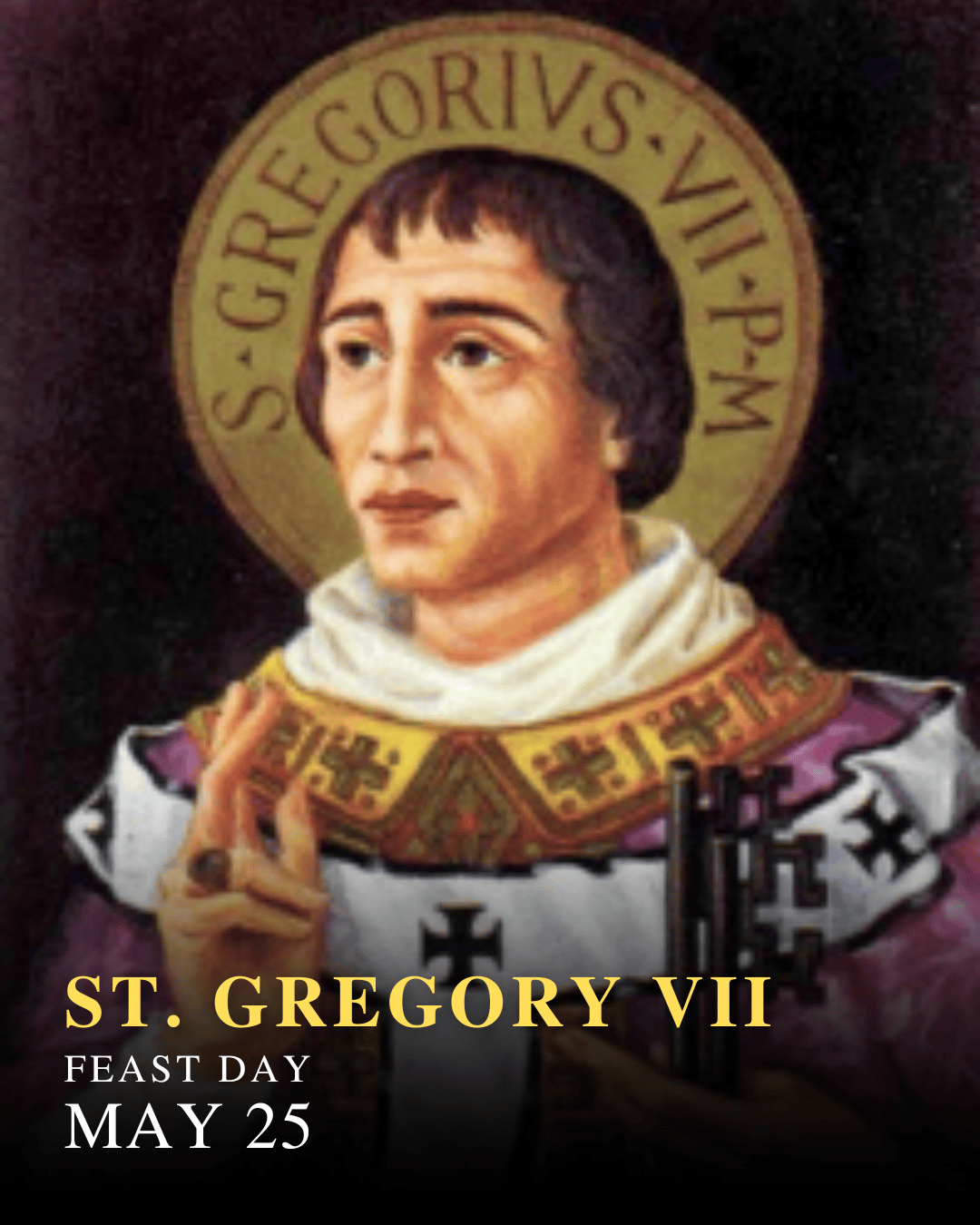
St. Gregory VII was one of the most important and courageous popes in Church history. Born Hildebrand of Sovana around the year 1020, he lived during a time when the Church faced serious challenges from corruption, political pressure, and confusion about spiritual authority. Before he became pope, he served the Church faithfully in different roles and became known as a man of prayer, discipline, conviction, and deep concern for reform.
When he was elected pope in 1073, he took the name Gregory VII and stepped into a difficult mission. The Church needed renewal. Some clergy had grown careless in their spiritual responsibilities. Powerful rulers often tried to control Church appointments for political advantage. Bishops and abbots could be treated like political officials rather than spiritual shepherds. Gregory saw that this harmed the holiness and freedom of the Church.
St. Gregory VII believed the Church belonged first to Christ, not to kings, nobles, or earthly powers. He wanted bishops and priests to serve God faithfully, free from manipulation and corruption. His desire for reform brought him into conflict with powerful leaders, especially Emperor Henry IV. Gregory’s firmness was not simply stubbornness. It came from a conviction that the Church must remain faithful to her divine mission.
His life reminds us that holiness is not always quiet or easy. Sometimes faithfulness requires courage, conflict, and sacrifice. St. Gregory VII did not seek comfort or popularity. He sought the good of the Church, even when that path brought suffering and exile.
To understand St. Gregory VII, it helps to understand the world in which he lived. In the eleventh century, political and religious power were often deeply entangled. Kings and nobles could influence who became bishops. Some Church offices were treated as positions of prestige or political usefulness rather than sacred responsibilities. This created confusion and weakened the witness of the Church.
Gregory believed reform had to begin with spiritual integrity. He wanted clergy to live holy lives, to serve with purity of intention, and to place God above worldly ambition. He also opposed simony, the practice of buying or selling Church offices. To Gregory, spiritual authority could never be treated as something to purchase or control. It was a sacred responsibility entrusted by God.
His efforts were not merely administrative. They were deeply spiritual. Gregory wanted the Church to be free to proclaim Christ, form souls, celebrate the sacraments, and guide the faithful without being dominated by political interests. He understood that when the Church becomes too dependent on worldly power, her spiritual mission can become compromised.
This is why his reforms mattered so much. He was not fighting for personal control. He was defending the freedom and holiness of the Church. His life reminds us that reform is not about criticism for its own sake. True reform begins with love for God, love for truth, and love for the people who need the Church’s faithful witness.
St. Gregory VII stood firm against powerful opposition. He teaches us that courage is not the absence of fear, but the willingness to do what is right when faithfulness becomes costly.
He sought holiness and honesty in the Church. His life reminds us to live with consistency, purity of intention, and a heart that chooses God over worldly advantage.
He endured conflict, rejection, exile, and hardship. He encourages us to remain faithful in long struggles, especially when doing the right thing feels lonely.
He guided the Church through a difficult period of reform. He shows that Christian leadership requires prayer, sacrifice, humility, and a willingness to serve truth rather than popularity.
One of the most famous conflicts connected with St. Gregory VII was the Investiture Controversy. At the heart of this struggle was a serious question: who had the authority to appoint bishops and invest them with symbols of office? Many rulers wanted to control these appointments because bishops often held influence, land, and political power. Gregory believed this practice placed the Church in danger.
For Gregory, bishops were not simply officials of an empire. They were successors of the apostles and shepherds of souls. Their authority had to be rooted in the Church’s spiritual mission, not in the favor of a ruler. When political leaders tried to control the appointment of bishops, the Church’s freedom was threatened.
This conflict brought Gregory into direct confrontation with Emperor Henry IV. The struggle became intense and painful. Gregory faced opposition not only from political powers but also from people within the Church who resisted reform. His choices were not easy, and his firmness came at a personal cost.
The Investiture Controversy reminds us that truth can become complicated when mixed with power, pride, and ambition. Gregory’s witness shows that spiritual integrity sometimes requires drawing clear lines. He was willing to suffer misunderstanding because he believed the Church had to remain faithful to Christ above all earthly authority.
St. Gregory VII’s leadership was costly. He was not universally admired. Some saw him as too strict. Others resisted his reforms because they threatened established patterns of influence and comfort. Yet Gregory remained committed to the mission he believed God had entrusted to him. His leadership was not rooted in a desire to be liked. It was rooted in responsibility.
Modern culture sometimes presents leadership as visibility, influence, applause, or personal success. Gregory offers a very different image. Christian leadership is service. It means carrying burdens for the sake of others. It means making difficult decisions when the easier path would be silence. It means standing for truth while still seeking the salvation of souls.
This lesson is not only for popes, bishops, or priests. It also matters for parents, teachers, ministry leaders, catechists, and anyone entrusted with responsibility. A mother guiding her children in faith, a parish volunteer serving quietly, a teacher correcting with love, or a friend speaking truth gently may all experience the cost of leadership. Gregory reminds us that faithful leadership often includes hidden sacrifice.
His life also teaches that leadership must be purified by prayer. Without prayer, courage can become harshness. Without humility, reform can become pride. Gregory’s example challenges us to seek courage and truth, but always with a heart anchored in God.
St. Gregory VII eventually experienced exile because of the conflicts surrounding his papacy. Exile was a painful end to a difficult mission. It would have been easy to see his suffering as failure. Yet the Church honors him as a saint because his faithfulness did not depend on visible success. He remained committed to God even when his earthly circumstances became painful.
This part of Gregory’s life is important because many people measure faithfulness by immediate results. If something becomes hard, we may wonder if we have failed. If people misunderstand us, we may feel tempted to give up. If doing the right thing brings suffering, we may question whether it was worth it. Gregory’s life reminds us that obedience to God is valuable even when the outcome is not easy.
His final years show the quiet strength of a soul that belongs to God. He did not have to see every reform completed in his lifetime. He did not need applause to prove that his sacrifice mattered. He trusted that God would use his efforts in the life of the Church, even beyond what he could see.
For anyone who has tried to do the right thing and suffered because of it, St. Gregory VII can be a powerful intercessor. He understands the loneliness of conviction, the pain of conflict, and the cost of perseverance.
St. Gregory VII’s example matters today because Catholics still need courage, integrity, and reform of heart. The Church in every age needs renewal. That renewal does not begin only with public programs or large decisions. It begins with personal holiness. Every believer is called to ask: Where do I need conversion? Where have I allowed comfort, fear, or pride to weaken my faithfulness?
Gregory also teaches that truth must be protected with humility and love. In a world filled with confusion, disagreement, and pressure to compromise, his life reminds us that conviction matters. But conviction must not become cruelty. The goal of truth is not to win arguments. The goal is to lead souls closer to God.
His witness can be especially helpful for Catholic women who are trying to live faithfully in their families, workplaces, and communities. Sometimes standing for faith means making choices others do not understand. It may mean guarding the spiritual life of your home, choosing integrity at work, speaking honestly but kindly, or refusing to treat faith as something secondary.
Gregory reminds us that holiness requires courage in ordinary life. We may never face emperors or public exile, but we will face moments when truth, humility, and faithfulness are tested. Those moments matter.
One lesson from St. Gregory VII is that reform must begin with fidelity to Christ. It is easy to criticize problems outside ourselves, but true renewal starts in the soul. Gregory desired reform in the Church because he loved the Church. In the same way, our desire for change should be rooted in prayer, charity, and humility rather than anger or pride.
Another lesson is that courage must be guided by truth. Gregory was not courageous merely because he was forceful. He was courageous because he believed something sacred was at stake. Christian courage is not about being loud or combative. It is about being faithful when silence or compromise would betray what is good.
A third lesson is that leadership often requires sacrifice. Whether in the Church, home, workplace, or community, responsibility can be heavy. Gregory shows that faithful leadership means serving others even when the cost is personal. It means accepting that not every act of obedience will be immediately understood.
Finally, Gregory teaches perseverance. His life was not simple. His mission brought conflict. His later years included exile. Yet he remained faithful. This is a comforting reminder that saints are not people who avoided difficulty. They are people who clung to God within difficulty.
You can ask St. Gregory VII to pray for you when you need courage to stand for truth, wisdom in leadership, or strength during conflict. He is a helpful intercessor for those who carry responsibility, especially when decisions are difficult or misunderstood.
If you are trying to lead your family with faith, ask St. Gregory to help you do so with courage and love. If you are serving in a parish or ministry, ask him to help you remain humble and faithful. If you are facing pressure to compromise your beliefs, ask him to help you stand firm without losing charity.
His intercession can also be meaningful when praying for the Church. St. Gregory loved the Church enough to suffer for her reform. We can ask him to pray for the pope, bishops, priests, religious, families, and all the faithful. We can also ask him to help us love the Church with both honesty and hope.
You may also strengthen your spiritual life through our Morning Prayer, Evening Prayer, and Healing Prayer pages. For more examples of faithful leadership and courage, you may enjoy reading about St. John I, St. Pius V, and St. Catherine of Siena.
St. Gregory VII reminds us that truth and faith must be protected, even when it is difficult. His life shows that standing for what is right may require sacrifice. He did not choose the easier path of compromise when he believed the Church’s freedom and holiness were at stake. He chose fidelity, even when it brought conflict.
Like St. John I and St. Pius V, he remained faithful in times of conflict. His example encourages us to live with courage, uphold truth, and trust God in every situation. He reminds us that holiness is not only gentle comfort. Sometimes holiness includes strength, clarity, and endurance.
His witness also helps us understand the difference between worldly power and spiritual authority. Worldly power often seeks control. Spiritual authority exists to serve truth and lead souls to God. Gregory’s life points us back to Christ, the true Head of the Church.
St. Gregory VII invites us to lead with integrity, stand firm in faith, and remain faithful to God’s call. His life is a reminder that courage rooted in prayer can bear fruit for generations, even when the cost is great.
“St. Gregory VII, help me to stand firm in truth and live with courage and integrity.”
— Prayer inspired by his life