Bl. Louis-Zéphirin Moreau
Shepherd of Compassion and Faith
1824–1901
Shepherd of Compassion and Faith
1824–1901
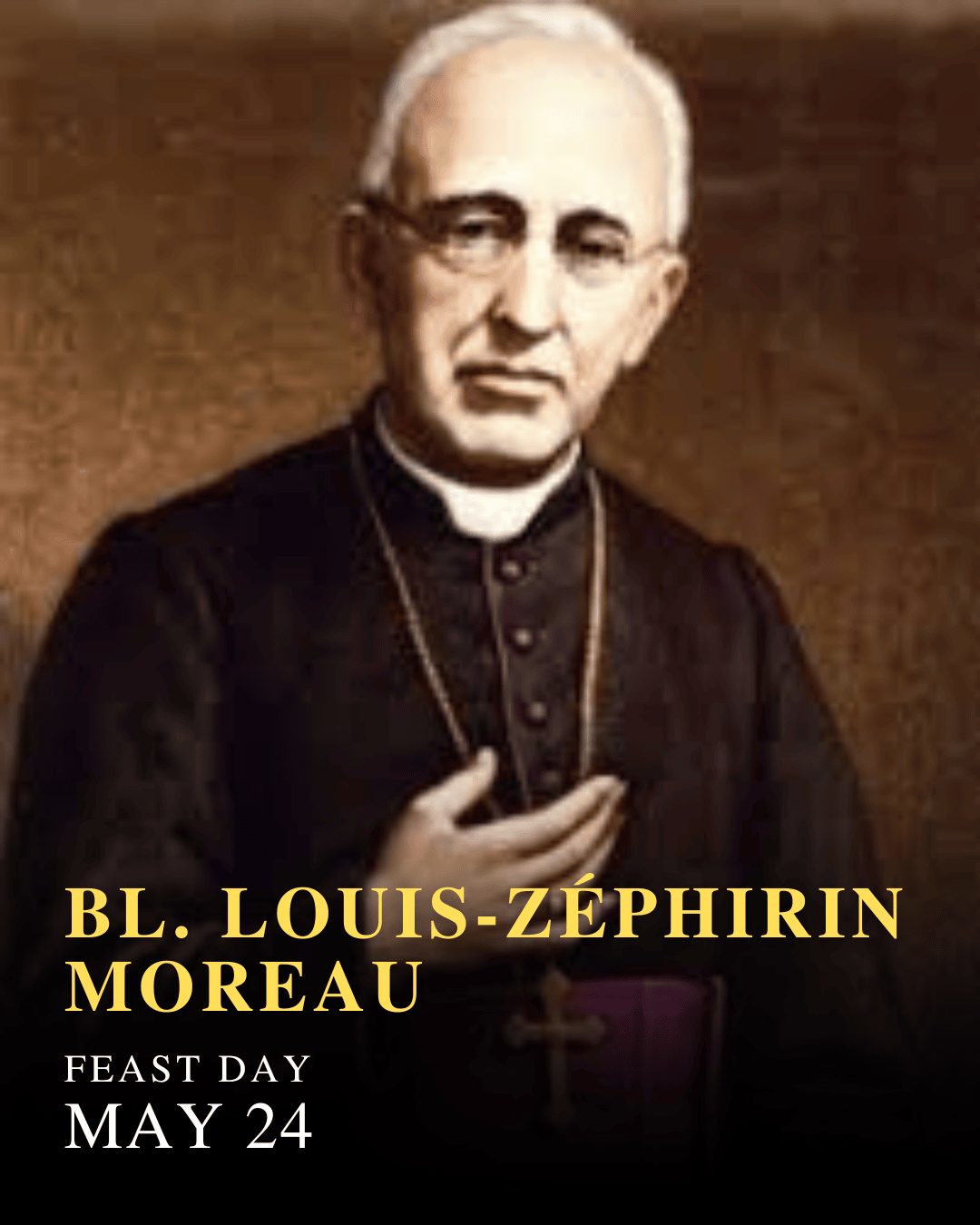
Blessed Louis-Zéphirin Moreau was a Canadian bishop remembered for his compassion, humble leadership, perseverance, and deep trust in God. He served the Church during a time of poverty, social change, illness, and many practical difficulties. Yet he did not allow hardship to make his heart cold or discouraged. Instead, he became known as a gentle shepherd who cared deeply for families, priests, religious communities, the poor, and those who needed the Church’s support.
He was born in 1824 in Bécancour, Quebec, Canada. From the outside, his life did not begin with obvious signs of greatness. He struggled with fragile health, and at different points his physical weakness seemed like it might prevent him from fulfilling the vocation God placed in his heart. Yet his story reminds us that God often works through people who feel limited, overlooked, or inadequate. Moreau’s life became a witness that holiness does not depend on being naturally strong. It depends on being faithful to grace.
As a priest and later as bishop of Saint-Hyacinthe, Blessed Moreau dedicated himself to the spiritual and practical needs of his people. He supported education, encouraged religious life, strengthened parishes, promoted care for the poor, and worked to form a Church that could serve families with both truth and tenderness. His leadership was not harsh or self-important. It was pastoral. He wanted people to know God, trust Him, and live their faith in daily life.
Blessed Moreau is especially meaningful for anyone who has responsibilities that feel heavy. His life shows that leadership is not about control, attention, or personal success. Christian leadership is service. It is the willingness to carry burdens for others, to make difficult decisions with charity, and to remain faithful even when the work is hidden, exhausting, or misunderstood.
When Blessed Louis-Zéphirin Moreau became bishop of Saint-Hyacinthe, he inherited many responsibilities. A bishop is not simply an administrator. He is called to be a shepherd, teacher, father, and servant. Moreau took this calling seriously. He cared about doctrine, but he also cared about people. He wanted the Church to be a place where souls could be formed, strengthened, and guided toward Christ.
His fatherly heart can be seen in his concern for education and formation. He understood that faith must be passed on with care. Families, children, parishes, and religious communities all needed support. In a time when many people faced hardship, education was not only about academic learning. It was also about forming consciences, strengthening character, and helping people live with dignity.
Blessed Moreau also supported the growth of religious communities, recognizing that the Church needs people who dedicate their lives to prayer, service, teaching, and care for others. His concern for religious life was not separate from his concern for ordinary families. He knew that holy communities could become a source of strength for the wider Church.
His leadership was marked by patience and compassion. He did not serve from a distance. He carried the needs of his people in prayer and action. This is why he is remembered not only as a bishop, but as a gentle shepherd. His life reminds us that authority in the Church should always be shaped by love.
Blessed Moreau cared deeply for others, especially the poor, the vulnerable, and those entrusted to his care. He teaches us to serve with empathy, tenderness, and attention to real human needs.
He guided his community faithfully and humbly. His life reminds us that true leadership is not about being seen, but about serving others with wisdom, patience, and love.
He endured illness, opposition, and heavy responsibilities with faith. He encourages us to remain steady when our duties feel difficult or when progress seems slow.
Blessed Moreau relied on God in all things. He shows us how to surrender our weaknesses, decisions, and responsibilities to the Lord with confidence.
One of the most encouraging parts of Blessed Moreau’s life is that he did not serve God from a place of perfect health or ease. He knew physical weakness. He knew what it meant to face limitations. For many people, weakness feels like an obstacle to holiness or usefulness. Blessed Moreau shows another possibility: weakness can become a place where God’s grace is revealed.
This does not mean suffering is easy or that illness should be romanticized. It means that God can work even when our strength is small. Moreau’s life speaks to anyone who feels too tired, too limited, too anxious, too burdened, or too ordinary to serve God well. His witness gently says that God is not waiting for us to become perfect before He works through us.
In his responsibilities as bishop, Blessed Moreau had to make decisions, guide others, and respond to the needs of the Church while carrying his own crosses. This required perseverance. It also required humility. A person who knows his own weakness is often more capable of compassion toward others. Moreau’s physical limitations may have helped deepen his tenderness toward those who suffered.
His example is especially meaningful for women who carry hidden burdens: caregiving, family responsibilities, financial stress, grief, health struggles, emotional fatigue, or spiritual dryness. Blessed Moreau reminds us that God can make a faithful life fruitful even when it feels fragile.
Blessed Louis-Zéphirin Moreau’s life matters today because many people are searching for examples of gentle, faithful leadership. The world often celebrates leadership that is loud, forceful, impressive, or ambitious. The Gospel shows another way. Blessed Moreau led through service. He carried responsibility with humility. He loved the Church not as an institution to control, but as a family to shepherd.
His life is also relevant because he understood that faith must touch real needs. He cared about education, families, religious formation, and the poor. These concerns are still urgent today. A living faith is not separated from daily life. It shapes how we raise children, care for neighbors, support the vulnerable, form communities, and respond to suffering.
Blessed Moreau also reminds us that perseverance is often quiet. Many saints are remembered for dramatic moments, but many holy lives are built through years of steady faithfulness. Showing up again, praying again, serving again, forgiving again, teaching again, and trusting again can become a path to holiness. This kind of perseverance may not always be noticed by the world, but it is precious to God.
For anyone serving in a family, parish, school, ministry, workplace, or community, Blessed Moreau offers encouragement. He shows that service does not need to be perfect to be holy. It needs to be rooted in love and offered to God.
The first lesson from Blessed Moreau is that leadership is a form of service. Whether someone is leading a diocese, a ministry, a classroom, a family, or a small group, Christian leadership must be rooted in humility. It asks, “How can I help these people grow closer to God?” rather than “How can I be admired?”
A second lesson is that compassion should be practical. Blessed Moreau did not only feel concern for others. He acted. He supported institutions, encouraged religious communities, promoted education, and cared for the poor. Love becomes more credible when it takes concrete form.
A third lesson is that hardship does not cancel vocation. Moreau’s fragile health and difficulties did not erase God’s call. Many people assume that if something is hard, it must not be from God. But sometimes the path God gives us requires courage, patience, and dependence on Him. Difficulty does not always mean we are on the wrong path. Sometimes it means we need grace to keep walking.
A fourth lesson is that holiness can grow through responsibility. Duties can feel heavy, repetitive, or unseen. Yet when they are lived with love, they can form the soul. Blessed Moreau’s responsibilities became part of his sanctification because he carried them with faith.
You can ask Blessed Louis-Zéphirin Moreau to pray for you when you need wisdom in leadership, strength in responsibility, patience in service, or compassion for those entrusted to your care. He is a helpful intercessor for parents, teachers, parish leaders, caregivers, ministry workers, and anyone who feels responsible for the well-being of others.
If you are carrying a duty that feels too heavy, ask Blessed Moreau to help you serve without discouragement. If you are caring for someone in need, ask him to help you love with patience. If you are leading others, ask him to help you lead with humility instead of pride. If you feel weak, ask him to help you trust that God can still work through you.
His intercession can also be meaningful for those discerning a vocation or trying to understand how God is calling them to serve. Blessed Moreau’s life shows that vocation is not always easy, but it becomes fruitful when lived with surrender. God does not always remove every obstacle, but He gives grace for each step.
You may also deepen your spiritual life through our Morning Prayer, Evening Prayer, and Healing Prayer pages. For other examples of faithful leadership and service, you may enjoy reading about St. John of Avila, St. Bernardine of Siena, and St. Catherine of Siena.
Blessed Louis-Zéphirin Moreau reminds us that true leadership in the Church is about service and love. His life shows that even in difficult circumstances, God can work through those who trust Him. He did not lead by seeking attention. He led by caring for people, strengthening faith, and giving himself to the mission God placed before him.
Like St. John of Avila and St. Bernardine of Siena, he dedicated his life to guiding others in faith. His example encourages us to care for others, remain faithful in responsibility, and trust in God’s plan even when the path is difficult.
His witness is especially powerful because it brings together strength and gentleness. He was not strong because life was easy. He was strong because he depended on God. He was not gentle because he lacked conviction. He was gentle because love shaped his leadership.
Blessed Moreau invites us to serve with humility, lead with love, and walk closely with God. His life is a reminder that holiness often grows in the middle of duties, limitations, sacrifice, and faithful service to the people God places in our care.
“Bl. Moreau, help me to serve others with love and trust God in all things.”
— Prayer inspired by his life